

Updated: November 2026 · Diskover Team
Quick answer: If you sing or play on a recording that gets released, you have performer rights even if you didn’t write the song. In Spain these neighbouring rights are collected and paid out by AIE whenever your music is played on radio, TV, in venues or on streaming platforms. Joining is free: you fill in the online form, sign it electronically and, once accepted, register your recordings to start getting paid in the distributions. Neither your distributor nor SGAE pays you this money, so if you’re not with AIE you’re leaving it on the table.
What performers’ neighbouring rights are
A released song generates several separate income streams, and each one has its own owner. Neighbouring rights (also called related rights) are the rights that Spain’s Intellectual Property Law grants to the people who perform the work and to those who produce the recording, regardless of who wrote it.
To make it clear, this is how a song’s money is split in Spain:
| Who | What they earn | Through |
|---|---|---|
| Master owner | Royalties from streams and downloads | Your distributor (for example, Diskover) |
| Songwriter and composer | Author royalties for every use of the work | SGAE or another society, or a publisher |
| Performing artist | Remuneration for public performance, streaming and private copying | AIE |
| Phonogram producer | Remuneration for public performance and private copying | AGEDI |
If you’re an independent artist who writes, sings and pays for your own recordings, you can be in all four rows at once. We go into more detail in what song royalties are and how to collect them.
What AIE pays and where the money comes from
AIE (Spain’s Society of Performing Artists) is the collecting society authorised by the Ministry of Culture to collect the performers’ remuneration that the law reserves for collective management. In other words, you can’t negotiate these payments one by one with every radio station or bar: AIE collects them and then distributes them according to how much each recording is used. They are:
- Public performance: when your recording is played on radio, TV, in a shop, a gym, a bar or a hotel.
- Making available: the remuneration the law guarantees performers when their recording is on streaming platforms, even if they have assigned their rights to the producer.
- Private copying: compensation for copies made for personal use.
- Rental of recordings, which is very minor today.
The latest published figures are from the 2025 Transparency Report, which AIE released in June 2026 (this year’s figures will be published in 2027):
| AIE figure (2025) | Amount |
|---|---|
| Total collected | €60.2 million (a record) |
| Collected for public performance of music recordings | €22.6 million |
| Collected for making available (streaming) | €11.1 million (€7.6 million in 2024) |
| Money distributed to artists | €48.9 million |
| Members at 31 December | 39,052 |
| AIE management fee | 10.54% |
Streaming is the fastest-growing item, and that’s exactly what matters most to emerging artists: if your songs are played on platforms, there’s performer remuneration waiting for you.
Who can join AIE
According to AIE itself, any performing artist who has taken part in a fixed, i.e. recorded, performance can join: phonograms (songs), audiovisual recordings, TV programmes or films. And not just the lead artist:
- Solo singers and band members.
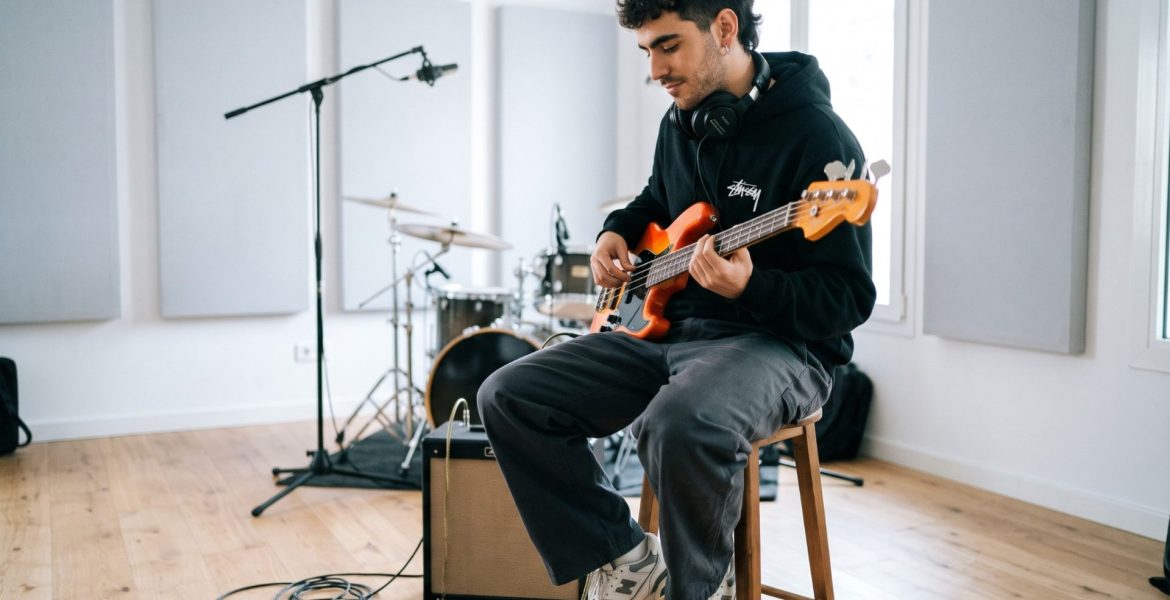
- Session musicians who play on other artists’ records.
- Backing vocalists.
- Conductors and other performers who take part in the recording.
Membership is free: there’s no joining fee and no annual fee. AIE is funded by a deduction from what it collects.
How to join AIE step by step
- Fill in AIE’s online registration form and sign it electronically. If you want to read them first, you can download the membership agreement, the application form and the declaration sheet (all in Spanish).
- Wait for the acknowledgement. If anything is missing, they’ll email you so you can fix it.
- Admission. The Board approves new members in batches (you can see the admissions calendar on their website). In 2026, applications received by 6 January, 7 April, 30 June and 6 October were approved at the end of February, May, September and November. If you apply now, you’ll go into the first batch of 2027.
- You get your member number and access to the Virtual Office.
- Register your recordings. This is the step most people forget. State which recordings you’ve played on and in what role. Have the title, lead artist, release date and ISRC code of each track to hand.
- Get paid in the distributions. In 2025 AIE made four distributions (March, June, September and December), and the statements can be checked in the Virtual Office.
Mistakes that cost you money
- Assuming your distributor already collects it. Your distributor pays you master royalties. Performer remuneration comes through a different route.
- Joining and not registering anything. Without registered repertoire, AIE can’t allocate what your recordings earn to you.
- Not knowing who played on each track. If you work with other artists or session musicians, put in writing who performs and who the phonogram producer is. A signed split sheet avoids arguments when the money arrives.
- Forgetting AGEDI. If you pay for and organise the recording, you’re also the phonogram producer, and that remuneration is managed by AGEDI, not AIE.
How it all fits with Diskover
At Diskover we make sure your master money reaches you in full and fast, and we help you sort out the rest:
- Distribution: your music is on Spotify in under 24 hours. On the Unlimited plan (€9.99/month) you keep 100% of your master royalties. You can work out what your streams earn with our Spotify royalty calculator.
- Your music doesn’t disappear: if you stop paying one month, we don’t delete your catalogue; it moves to the free plan with an 80/20 split and keeps playing, and keeps generating your performer rights too.
- Author royalties: if you also write, Diskover Publishing registers you as an author and registers your works with UNISON for free if you’re not with any society, and collects your author royalties worldwide (you keep 75%).
- Real people: if you have questions about your ISRC codes or your release data, our customer support team replies fast, and we’re in Madrid (C. de Luis I, 86, 28031).
Want your music to start earning all its income? Distribute with Diskover and join AIE so no right goes unpaid.
Frequently asked questions
What are neighbouring rights in music?
They are the rights the law grants to performing artists and to the producers of a recording, separate from the songwriter’s author rights. In Spain they are managed by AIE (performers) and AGEDI (producers).
How much does it cost to join AIE?
Nothing. Joining AIE is free and there’s no annual fee. The society is funded by a management fee on what it collects, which was 10.54% in 2025.
Can I get paid by AIE if I only played on another artist’s record?
Yes. All performers who took part in a released recording can join, including session musicians and backing vocalists, not just the lead artist.
How long does AIE take to accept an application?
AIE approves new members in four batches a year. In 2026 the deadlines were 6 January, 7 April, 30 June and 6 October, with approval two to three months later.
Does my distributor collect AIE rights for me?
No. Your distributor pays you master royalties for streams and downloads. Performer remuneration for radio, TV, venues and streaming is collected by AIE, and to get it you need to be a member and register your recordings.


